
Service · Market research
Analyse your market before a launch, to settle one precise question.
It all starts with a decision to inform: which offer, for which customers, at what price. We analyse the market, the competition and the segments, with sources to back it up. The agents of BAM, IA Marketing’s proprietary platform, prepare the reading of the sources; the IA Marketing team analyses, and you decide. The study ends with priorities and an activation plan.
What is at stake
Why a study before deciding
A market poorly measured
Without a market size or clear segments, the offer gets built on intuition.
Competitors poorly known
They get named, but rarely compared on what matters to your customers.
Customers reduced to an average
Targets that are too broad produce messages that speak to no one.
Situations
The questions a study can settle
Enter a new market
Which offer, for which companies, at what price? That was SMEG’s question on building energy management in France.
Raise awareness of a programme
Who to target, where, with which messages? That was IBM SkillsBuild’s question for its free training.
Rethink your product mix
Which products to develop, for which customers? For its Dispoguard brand, Bleu Agro found a segment of its own.
Move upmarket
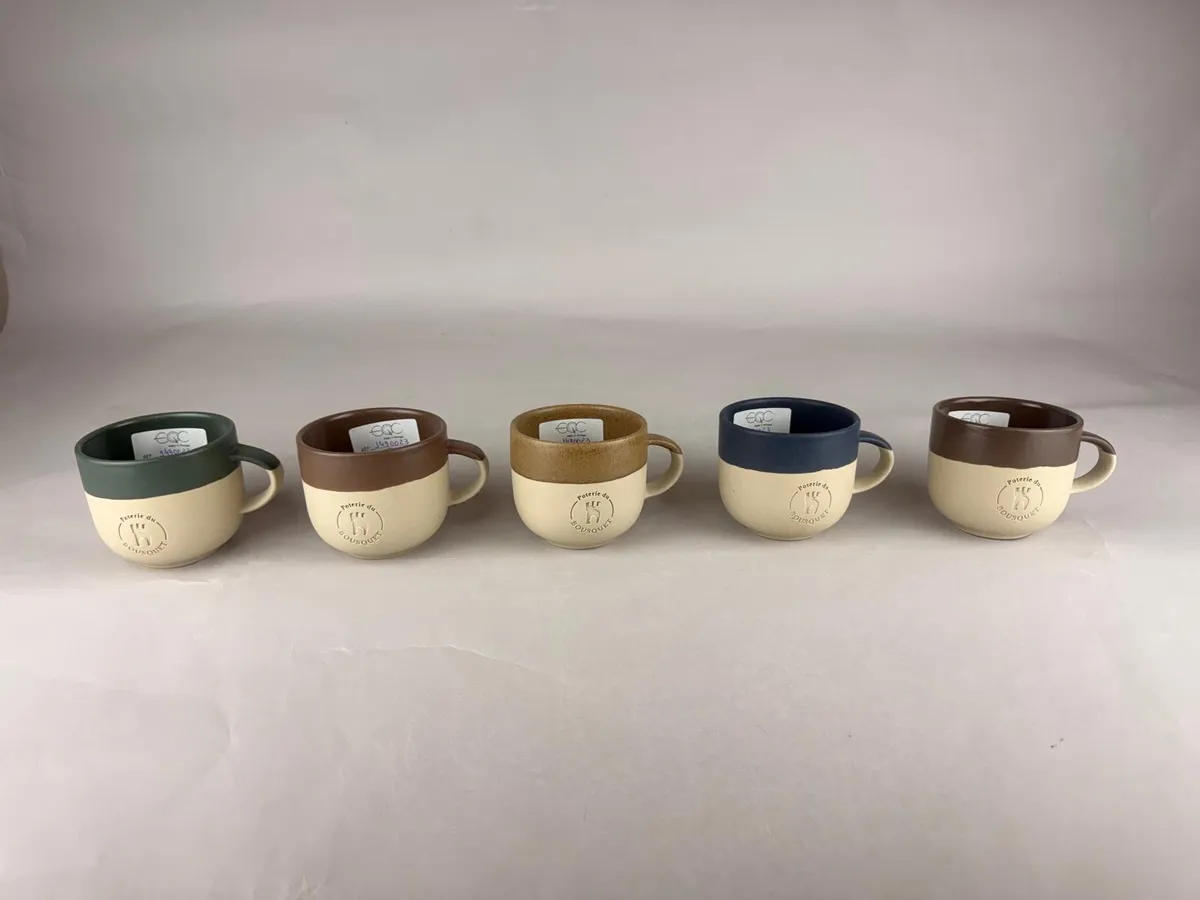
Where to stand against the existing offer? Poterie du Bousquet observed its market at a trade show.
Roles
What we bring, what your team keeps
IA Marketing
- Scope the question to settle, with management
- Analyse the environment, the market and the competition, with sources to back it up
- Build the segments, the personas and the customer journeys
- Translate the study into priorities and an activation plan
Your team keeps
- The question asked and the hypotheses to test
- Your knowledge of the field and of your customers
- The final choice among the proposed priorities
How it unfolds
Four steps, from the question to the activation plan
The question
Set the decision to inform and the scope. You get a scoping note.
The market
PESTEL, market size, trends and competition. You get a reading with figures and sources.
The customers
Segments, personas and journeys. You know who to target, and with which arguments.
The priorities
Value proposition, pricing, actions ranked by effort and by impact. You get an activation plan.
Market research
Analyse your market before choosing: the study, deliverable by deliverable
An IA Marketing study serves a decision: where to position, for whom, and with which arguments. Here is what it contains, illustrated by two real, anonymised studies: a premium homeware brand and a food producer.
The market and its trends
Size, growth and underlying trends, with their sources.
Example For a food producer: health and wellbeing, world cuisines, alternative grains, snacking, packaging and digital culture, each trend illustrated by products already on the shelves.
The competition
A comparison table on the criteria that matter to your customers.
Example For a premium homeware brand: four competitors rated side by side on transparency, creativity and positioning.
Positioning
The pillars that set you apart, and the pivot to make.
Example Creativity, CSR commitment and accessible premium; a pivot from transactional to relationship marketing.
Personas
Motivations, barriers, journeys, arguments and tone, for each target.
Example Three consumer personas, completed by two professional targets, with their preferred channel.
Micro-segments
A precise segment, measured by online demand, and the products that can answer it.
Example An heirloom cereal variety: search volume, difficulty, intent and trend, then six product ideas.
Priorities and journeys
Three priorities, and the customer journeys to equip first.
Example Impulse purchase on mobile, collected in store; online research, then purchase in store with an adviser.
Extract · three personas of a premium homeware brand
Busy urbanites
“My flat is my calling card.”
- Motivation
- Style, and speed
- Barrier
- Delivery times, the fear of getting it wrong
- Argument
- “Ready for tonight” rather than “lasting quality”
- Tone
- Playful, brisk
- Channel
- Mobile, then collection in store
Eco-demanding families
“We don’t want nice stories any more. We want proof.”
- Motivation
- Proven sustainability
- Barrier
- Distrust of greenwashing
- Argument
- Traceability, visible certifications
- Tone
- Factual, transparent
- Channel
- Online research, then the shop
Seniors looking for advice
“Real quality is something you can touch.”
- Motivation
- Touch, service
- Barrier
- Browsing online, transport
- Argument
- What is passed down from one generation to the next
- Tone
- Measured, narrative
- Channel
- Newsletter, then shop and advice
Extract · a micro-segment for a food producer
An heirloom cereal variety, positioned as a superfood
- 5,400monthly searches in France
- 19%difficulty: an accessible keyword
- Informationalsearch intent
- Risingtrend, with stable searches
Six product ideas for Gen Z and students, each with what makes it work. Three examples:
- Ready-to-heat bowlsNutritious, quick and photogenic: made for social media.
- Takeaway wrapsEasy to eat on the move, with eco-friendly packaging.
- Energy barsSimple ingredients, a snack between two lectures.
Anonymised examples. Each study cites its sources; market figures are only repeated here to illustrate the method.
Two recent studies
A question to settle, a study, a decision
SMEG · building energy management
Entering the French energy-management market
“Which offer, for which companies, at what price?”
What the study covered
- PESTEL
- Market size
- Competition
- Differentiating factors
- Personas
- Customer journeys
- Pricing strategy
- Value proposition
- Activation plan
The trade-off Two markets in one: large companies want bespoke solutions, SMEs want standardised, affordable offers. Priority no. 1 in the effort/impact matrix: a “boxed standard” offer for SMEs, with modular pricing.
A market estimated at $1.65 billion in France in 2024, 60% of it driven by large companies (the study’s estimate, from public data). Status: team recommendation, not implemented, as SMEG changed direction. Result not measured.
IBM SkillsBuild · free training
Raise awareness of a training programme, then fill its sessions
“Whom to target, where, and with which messages?”
What the study covered
- INSEE and Eurostat data
- Priority targets
- Regional strategies
- Competition
- SWOT
- Five proto-personas
- Messages per persona
From the study to the campaign Two BAM agents took over: MIKA refined the personas from behavioural data, JOHANNES wrote and A/B-tested campaigns in the brand’s voice. The visual “La Data : ton atout carrière” (Data: your career asset) won.
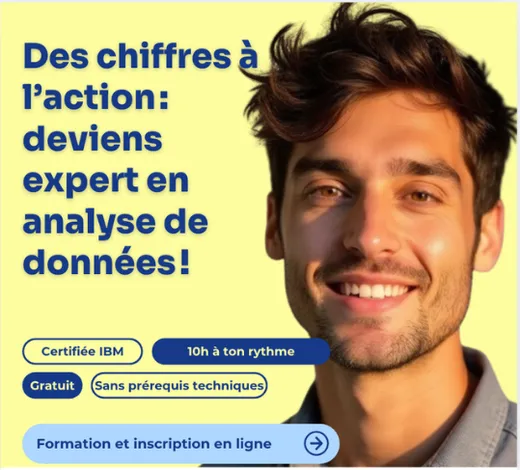
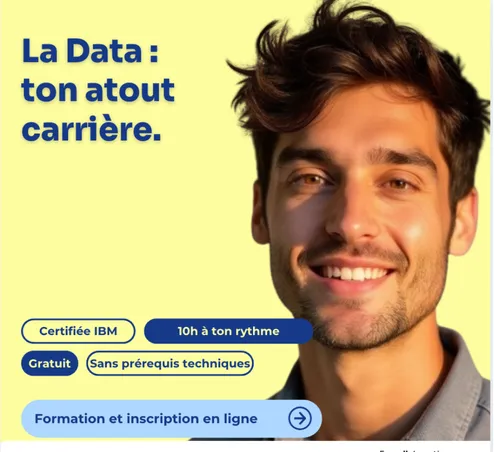 Winner
Approach validated by the IBM SkillsBuild acquisition team, by means of the A/B test. Figures reported by IBM SkillsBuild, taken up in the IA Marketing success story.
Case studies and results
Studies that changed a decision
The choice, its reasons, its trace · Poterie du Bousquet
- Starting situation
What colour signature should the house give its collections?
- Reasoned choice
IA Marketing’s recommendation
A “house” direction, discreet and sophisticated, with a deep gloss: six colours and two finishes as the basis for decisions and tests
- The house’s DNA and the market research carried out at a trade show
- Stand out, without claiming a colour “never seen before”
- Work with the texture of stoneware
- Form a coherent, reproducible palette
Team recommendation Choice validated by the client - Observable work
The choice shows in how the collections are presented to professionals.
Work delivered - Documented result
- brochure requests
- 70
Result measured
Poterie du Bousquet
Choosing a signature colour in a category with no clear signature. House of potters since 1815.
13 stands assessed in 65 minutes at a trade show
Read the case study
Dispoguard
A PPE brand that speaks to operators, from packaging to catalogue
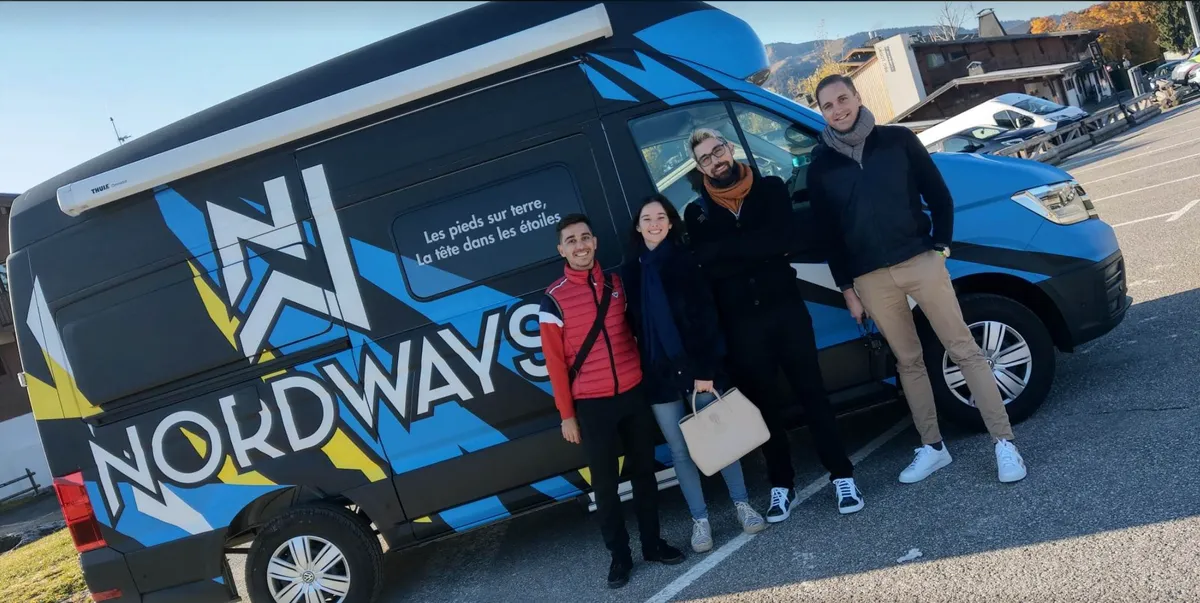
Nordways
After COVID, hospitality, luxury and the Meilleurs Ouvriers de France (a French distinction recognising excellence in skilled trades) rather than the medical sector
+60% net margin, +45% productivity
The results, with figures to back them up
Frequently asked questions
Your questions
How does an engagement start?
With a 30-minute scoping call: your challenge, the scope and what could come next. It is not a product demo.
How is this different from marketing consulting?
A study answers one precise question, to inform a decision. Consulting then supports a whole set of choices, from positioning to roll-out, if you need it.
How long does a study take?
It depends on the question and the scope: a micro-segment does not take the same work as entering a new market. The scoping call sets the scope and the timeline.
Where does the data come from?
From public sources (INSEE, Eurostat, sector statistics, reports), from online monitoring and social media, from your own data if you share it, and from the field. Every figure is sourced.
What role does AI play?
BAM’s agents prepare the reading of the sources, a first version of the personas and message variants. The IA Marketing team checks the sources and analyses. Your management validates and decides.
And after the study?
The study leads to an activation plan. We can then support you on positioning and brand, or equip your teams with agents.
Market research
A decision to make about your market?
30 minutes on the question to settle, your market and the scope of the study.