
Video games · Art direction
Queen’s Pact: art direction in the service of card choices
For Queen’s Pact, a deckbuilder in which the Queen offers the player a pact, Lydie Catalano (IA Marketing) handled the art direction. She produced the visuals with her own AI models, Stable Bibi, which she shares with Cyrano Studio(opens in a new tab), her partner studio.
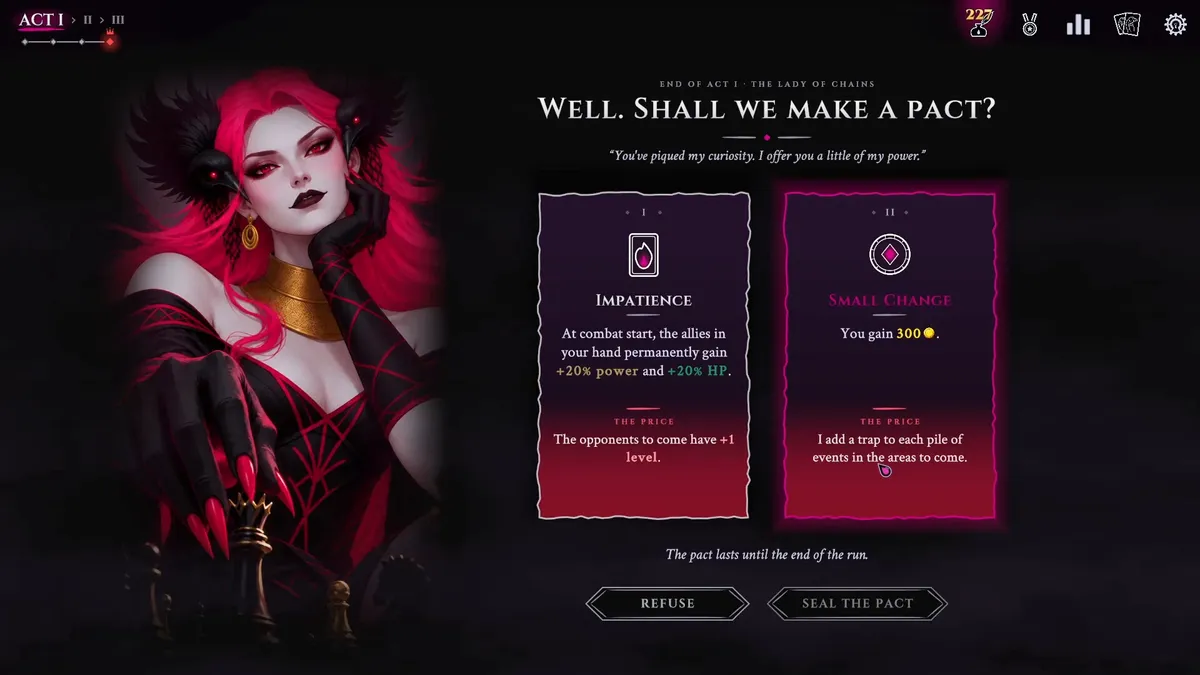
- Game
- Queen’s Pact, deckbuilding roguelite
- Project
- Art direction, visual production, marketing plan
- Visuals
- IA Marketing and Cyrano Studio, with Stable Bibi
- Release
- Planned for Q1 2027, on Steam
In brief · 7 min read
- The question
- How to give the game a coherent visual identity, and a marketing strategy the team can carry out?
- The recommended choice
- An art director who produces all of the game’s art with Stable Bibi, and a marketing plan to roll out on Steam and social media
- Who decided
- Option chosen by the Basalt Breach studio at the end of its art investigation
- The result
- 86% of the artworks produced are used in-game, studio count, November 2026. A production measure, not a commercial result: release is planned for Q1 2027 on Steam.
The choice, its reasons, its trace · Queen’s Pact
- Starting situation
An independent studio is preparing Queen’s Pact, a deckbuilding roguelite. For the visuals, it looked at three options: store assets, public generative AI models, and artists paid in equity or a share of revenue. On the marketing side, the groundwork exists (market, audience, positioning, key arguments) but not the in-house skills.
How to give the game a coherent visual identity, and a marketing strategy the team can carry out?
- Reasoned choice
Art direction and marketing plan by IA Marketing (Lydie Catalano), visuals produced with Cyrano Studio
An art director who produces all of the game’s art with Stable Bibi, and a marketing plan to roll out on Steam and social media
- A coherent, lasting artistic vision, with a real identity and a real approach to representation
- Visuals produced with models trained on personal and royalty-free images, without the ethical problems of large models
- Someone who fits, on a human level, with the project and the team
- See what really makes the difference, so as not to waste time, money, energy and motivation
Team recommendation Choice validated by the client - Observable work
The game’s art, by category, and a marketing plan.
- 441 artworks produced, 380 of them used in-game: items, minions, relics, events, enemies and bosses
- A plan to roll out on Steam and social media, with a clearer view of what makes the difference
Work delivered - Documented result
- of the artworks produced are used in-game
- 86%
Result to be documented
A game where every card is a decision
In a deckbuilder, you build your deck as you play: adding cards, sacrificing some, upgrading others. Queen’s Pact’s battles then play out automatically. So the image does not merely decorate the screen: it accompanies choices whose consequences the player must be able to follow.
How to go from scattered explorations to a signature?
Images with no common thread
The first explorations changed palette and rendering from one creature to the next.
Cards read in the middle of a game
The image accompanies a decision: what you play, what you sacrifice, what you upgrade.
Characters, not appearances
A diversity of female profiles, where each character acts and wields an identifiable power.
Three avenues studied, none that could carry the identity
Before the collaboration, the studio had carried out an art investigation around three main avenues. Each ran up against identity, ethics or the very possibility of finding the right person.
Store assets
Restrictive and generic: no identity.
Public generative AI models
Ethical problems, a training base potentially built on theft, training that is costly for the environment, limited representations, and identity problems: hard to keep a unique, coherent and persistent artistic identity at a good level of quality.
Working with artists
Hard to find people who will work for shares or a percentage of revenue, and who fit with the team and the project.
What changed
An art director who was a human fit for the project, a coherent and persistent vision, all of the art produced in line with that vision, a real approach to representation, without the ethical problems of large models.
Scattered creatures, then a world
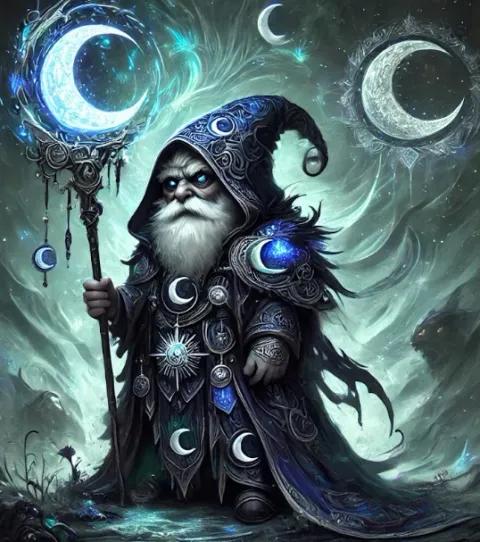
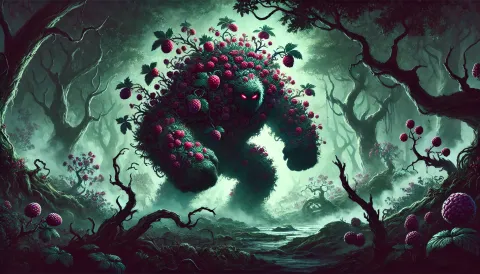
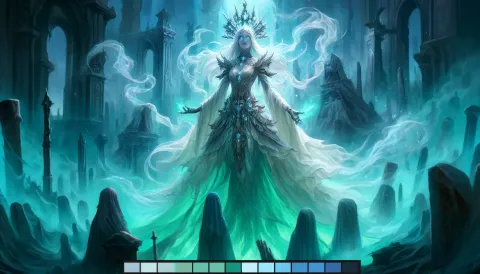
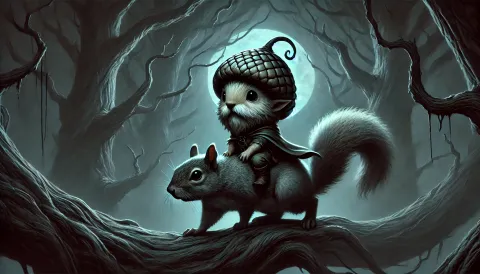 Before
- Five creatures, five palettes
- A rendering that changes from one image to the next
- No figure yet to tie the world together
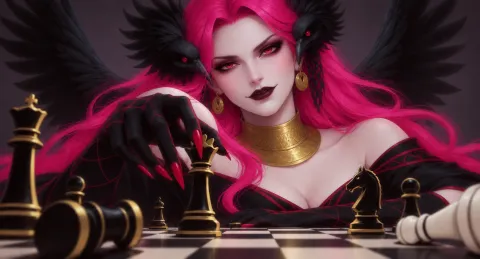
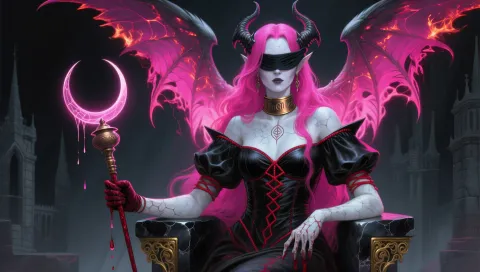
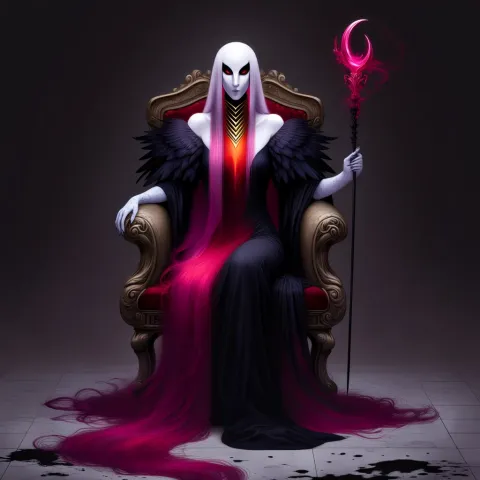 After
- Figures of power: throne, sceptre, chessboard
- A tighter palette: black, white, neon pink, gold
- A gothic vocabulary: wings, horns, crescent moon
A signature rather than a gallery
The creative approach
Everything starts with the Queen and her pact
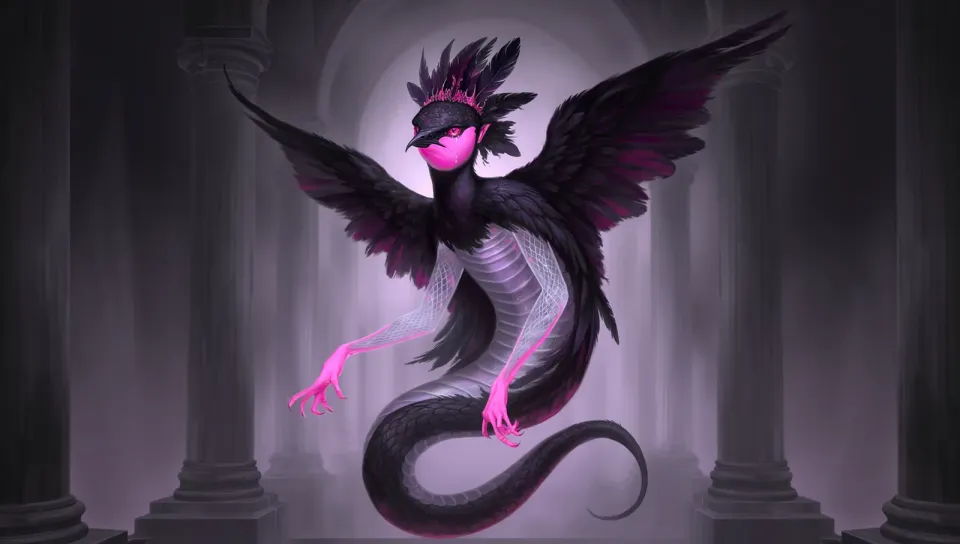
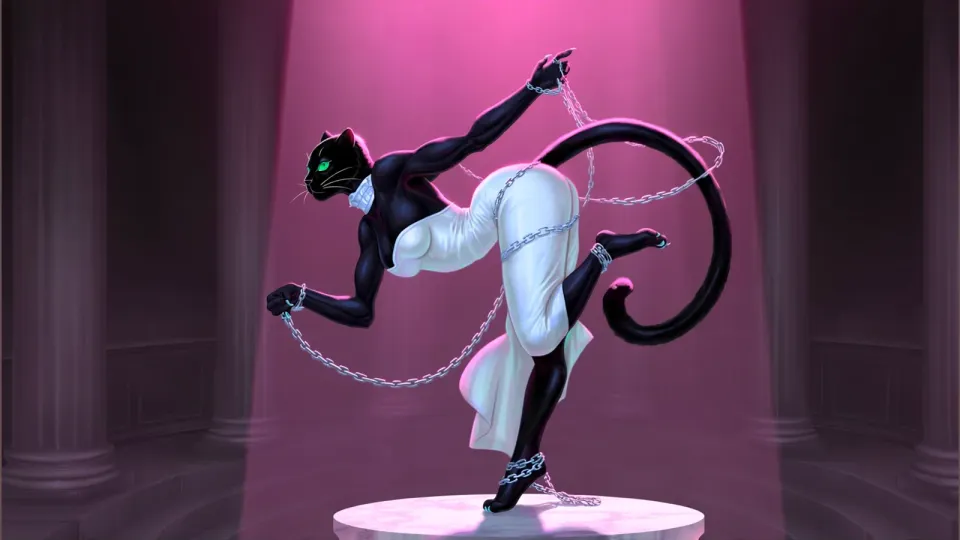
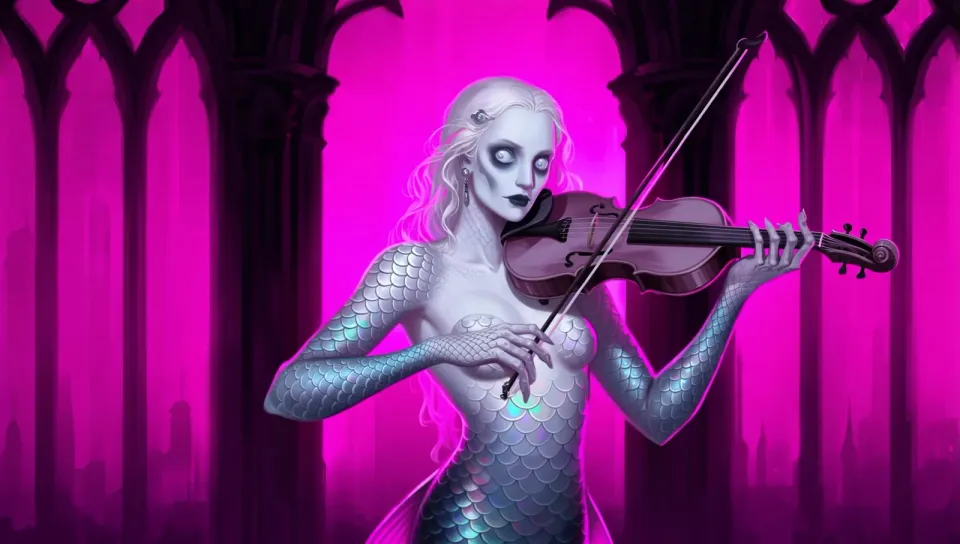
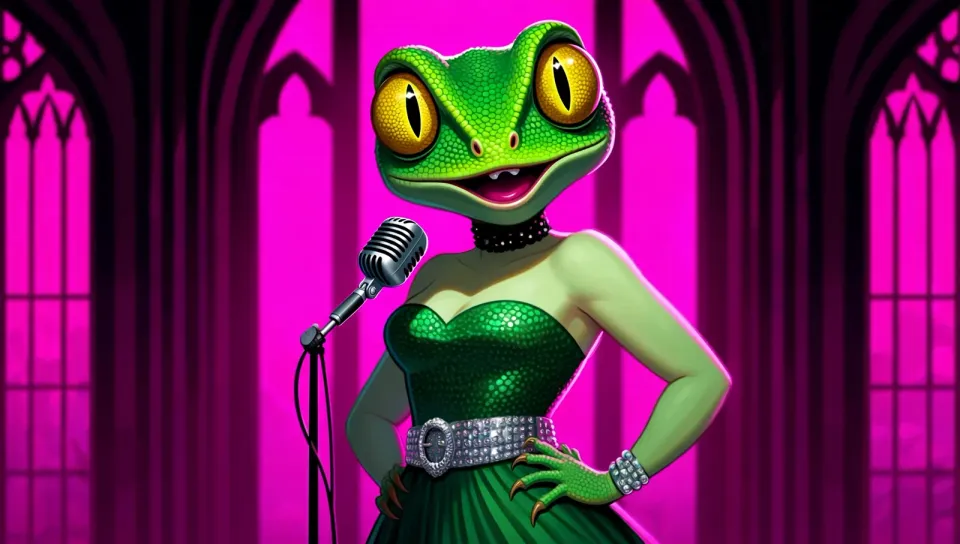
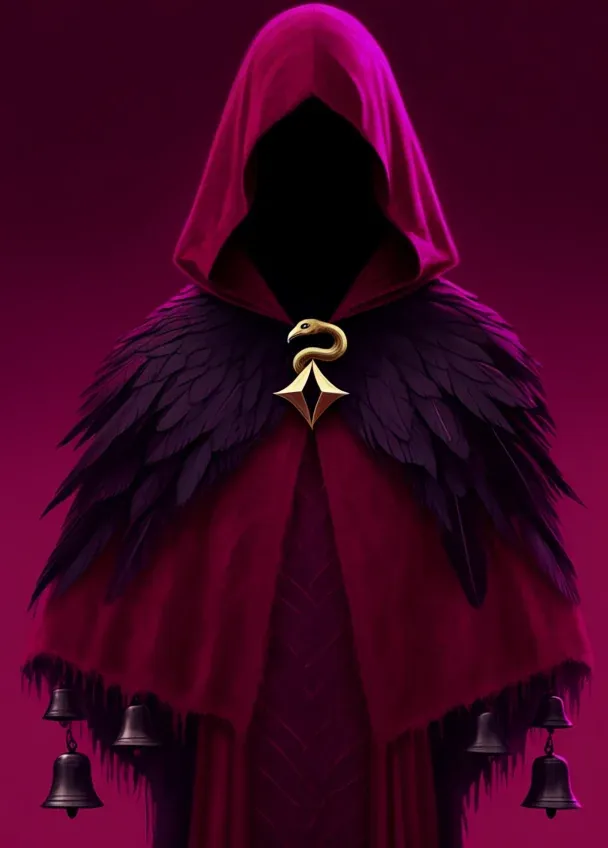
Rather than multiplying creatures and styles, the art direction gathers the world around one figure: the Queen who offers the pact, a gothic silhouette against a dark background shot through with neon pink. A recognisable identity, which leaves room for the information the player needs in order to choose.
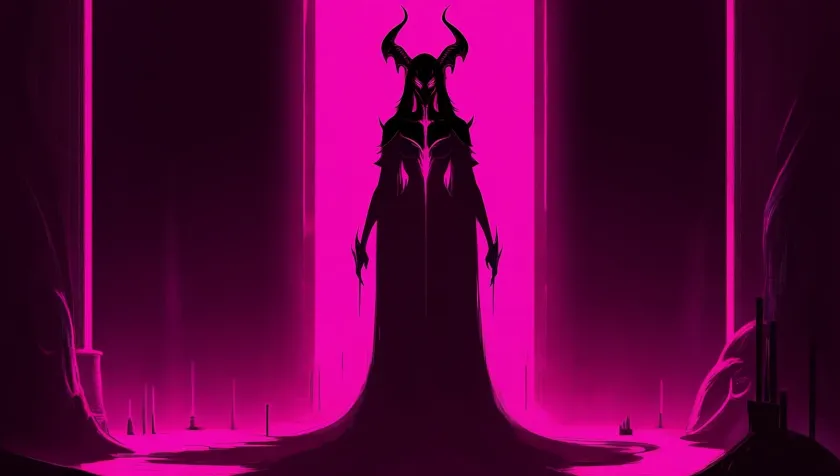
What the image must serve during play
Neon pink has a function
Against a dark background, it signals a selection or accompanies an effect. It never carries information on its own: a symbol or a label backs it up.
Gothic sets up the ritual
The Queen, the danger, the pact. K-pop energy gives the scene its rhythm, without imitating any identifiable artist.
A sacrifice is not an upgrade
One is a loss, the other evolves a card you keep: two gestures, two visual treatments.
Characters who act
A gesture, an object, an attitude tied to the role, rather than a pose unrelated to the card’s effect.
441 artworks produced, 380 used in the game
The art direction produced all of the game’s artwork. The studio counted, by category, those present in the project and those used in the game.
| Category | Artworks present | Used in game | Not used | % used |
|---|---|---|---|---|
| Items | 68 | 60 | 8 | 88% |
| Minions | 147 | 135 | 12 | 92% |
| Relics | 44 | 39 | 5 | 89% |
| Events | 89 | 67 | 22 | 75% |
| Enemies, bosses included | 93 | 79 | 14 | 85% |
| Total | 441 | 380 | 61 | 86% |
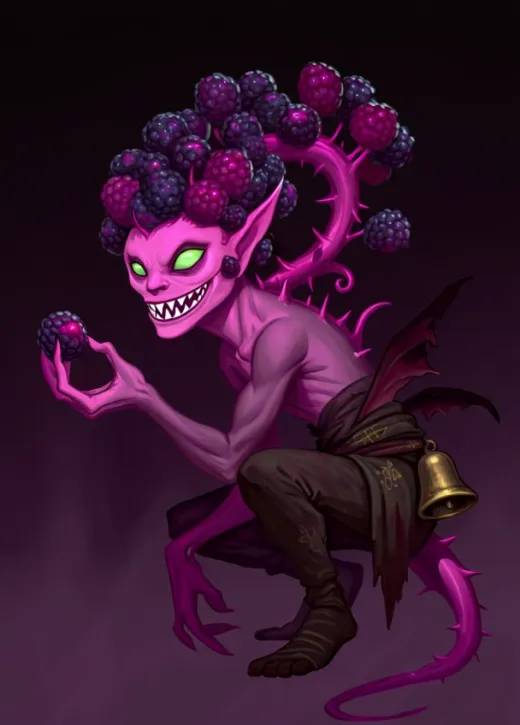
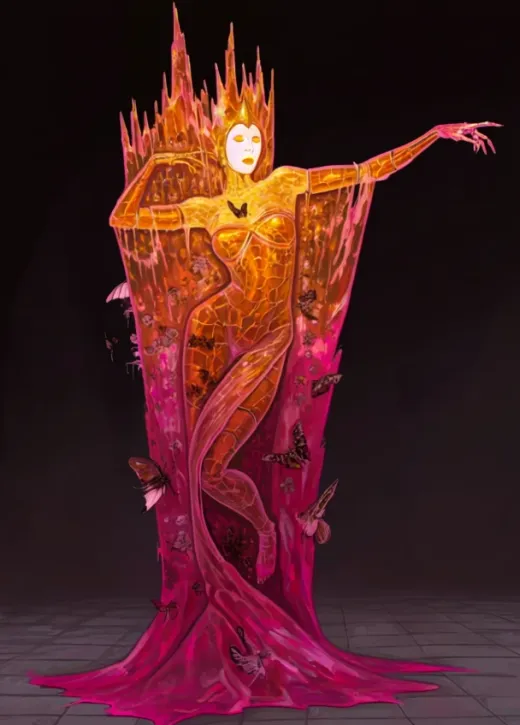
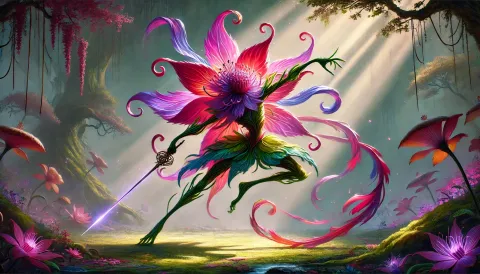
Two full-length figures
The imp crowned with blackberries and the crystal queen surrounded by butterflies: two creations by the art direction, drawn in portrait format. They carry the game’s palette, black, neon pink, gold, and its vocabulary, horns, crowns, little bells.
A solid base, a plan that was missing
The studio had a good marketability base: market, audience, positioning, key arguments. What remained were the typical problems of independent studios.
No in-house marketing skills
The first of the typical problems of independent studios, in the studio’s words.
Everyone has an opinion
Hard to sort the true from the false, to see what really makes the difference, to avoid wasting time, money, energy and motivation.
Staying focused despite the distractions
Hard to stick to a coherent, relevant strategy.
Getting to a task list
Hard to set out a concrete strategy, with defined tasks to put in place.
What changed: better visibility on what makes the difference, and a plan the team can roll out on Steam and social media, to make gradual progress in marketing and communication.
Three teams, one world
IA Marketing
Art direction, by Lydie Catalano, and visual production with Stable Bibi, the AI tool of IA Marketing and Cyrano Studio. Its models are trained on personal and royalty-free images.
Cyrano Studio
IA Marketing’s partner studio: visual production with Stable Bibi. It also manages Lydie Catalano’s photo exhibition with the Partage gallery(opens in a new tab), in Lyon.
Cyrano Studio on Instagram (opens in a new tab)Basalt Breach
The game, its rules and its mechanics: sacrifices, combinations, upgrades, automatic battles. The first visual explorations, with DALL·E.
Basalt Breach on LinkedIn (opens in a new tab)“What changed is that we were able to work with an art director who was a good human fit for the project, with a coherent and persistent artistic vision, able to produce all of the game’s art in line with that vision, with a real identity, a real approach to representation, and free from the ethical problems of large models.”
“What changed was better visibility on what makes the diff, a plan we can roll out on Steam and the socials to level up bit by bit in marketing and comms too.”
On the development side
Alex, the game’s developer, worked mostly on the art side. He did not use BAM himself: Léo showed it to him once or twice, on a call.
“When you create a project, being able to picture it is critical. For me, the arrival of the visuals was the shift from ‘we want a good game’ to ‘OK, we are going to have a good game and it will look like this’.”
“It is not just decorative. A lot of the recent juice, various animations, were based directly on the art direction and the assets available. In a world where code no longer has value, the value is stronger elsewhere, including the visuals.”
“BAM confirmed to us several times that the idea is viable, that the market still exists. That helps to dispel doubt, to navigate. In a world where everything moves fast, you need to be able to revise your strategy constantly. With automated, intelligent tools, you keep pace: you can refresh the studies every month if needed, or even every week.”
An identity in place, a game to discover
- A recognisable world: a Queen, gothic frames, neon-pink accents.
- A marketing plan to roll out on Steam and social media.
- A release planned for Q1 2027, on Steam.
Assertive art direction attracts and gives an identity. On its own, it does not demonstrate how interesting the card choices are or how clear the battles are: the games played will show that.
See Queen’s Pact on Steam (opens in a new tab)After the Queen’s Pact case
Does your universe need to hold together from the poster to the interface?
A 30-minute scoping call: the decision to make, the scope, the possible next step.

What next?
What comes next for your project?
Scoping call
A decision close to this case?
Thirty minutes to place your project: the issue, the scope and the possible next step. This is not a product demo.
Managed service
Talk to our team about running your marketing
The IA Marketing team runs your marketing projects in BAM, IA Marketing’s proprietary platform, as a managed service. Your team checks, validates and decides.